

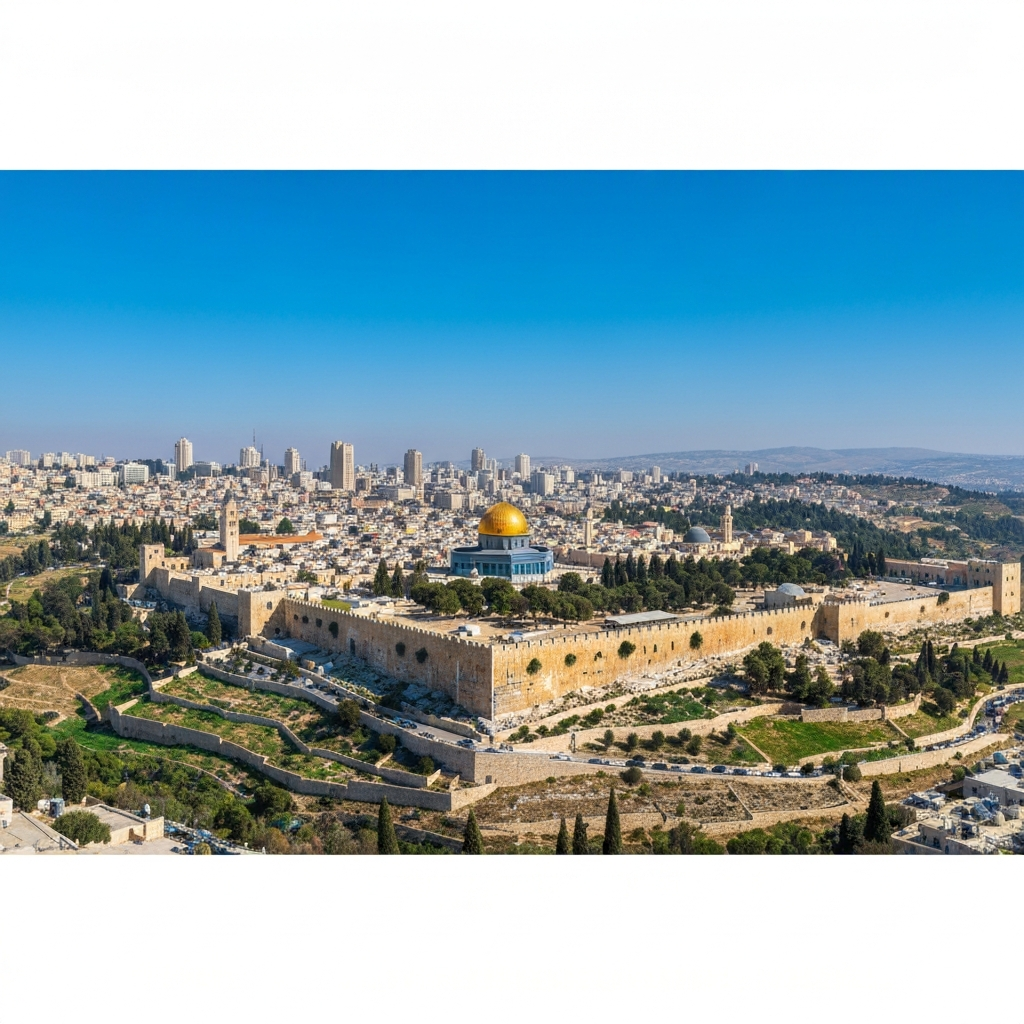
Jerusalem’s climate is characterized by its unique position atop the Judean Hills, approximately 800 meters (2,600 feet) above sea level. This elevation contributes to a hot-summer Mediterranean climate, featuring hot, dry summers and mild, wet winters.
Seasonal Overview
Summer
Summers in Jerusalem are long and arid, with average high temperatures reaching up to 33.4°C (92.1°F) in August. Despite the heat, the city’s low humidity levels and the arrival of the “Jerusalem breeze” in the late afternoon provide some relief, often necessitating an extra layer for evening activities.
Winter
Winters are relatively short and cool, with average temperatures around 9.1°C (48.4°F) in January. The city receives most of its annual precipitation during this season, averaging approximately 537mm (21 inches), primarily between October and May. Snowfall is rare but can occur, with significant snowfalls happening every few years.
Environmental Considerations
Jerusalem’s unique climate supports a diverse range of plant and animal life. The city’s location between the Mediterranean and desert regions results in a variety of vegetation types and a rich bird population, including species like the hooded crow and the Palestine sunbird.
However, the city faces environmental challenges, particularly concerning the protection of open spaces and biodiversity. Urban expansion and development pose threats to natural habitats, making conservation efforts crucial to maintaining the ecological balance.
Conclusion
Understanding Jerusalem’s distinctive climate patterns and environmental challenges is essential for residents and visitors alike. By appreciating the city’s unique weather and ecological diversity, we can better contribute to its preservation and sustainable development.