

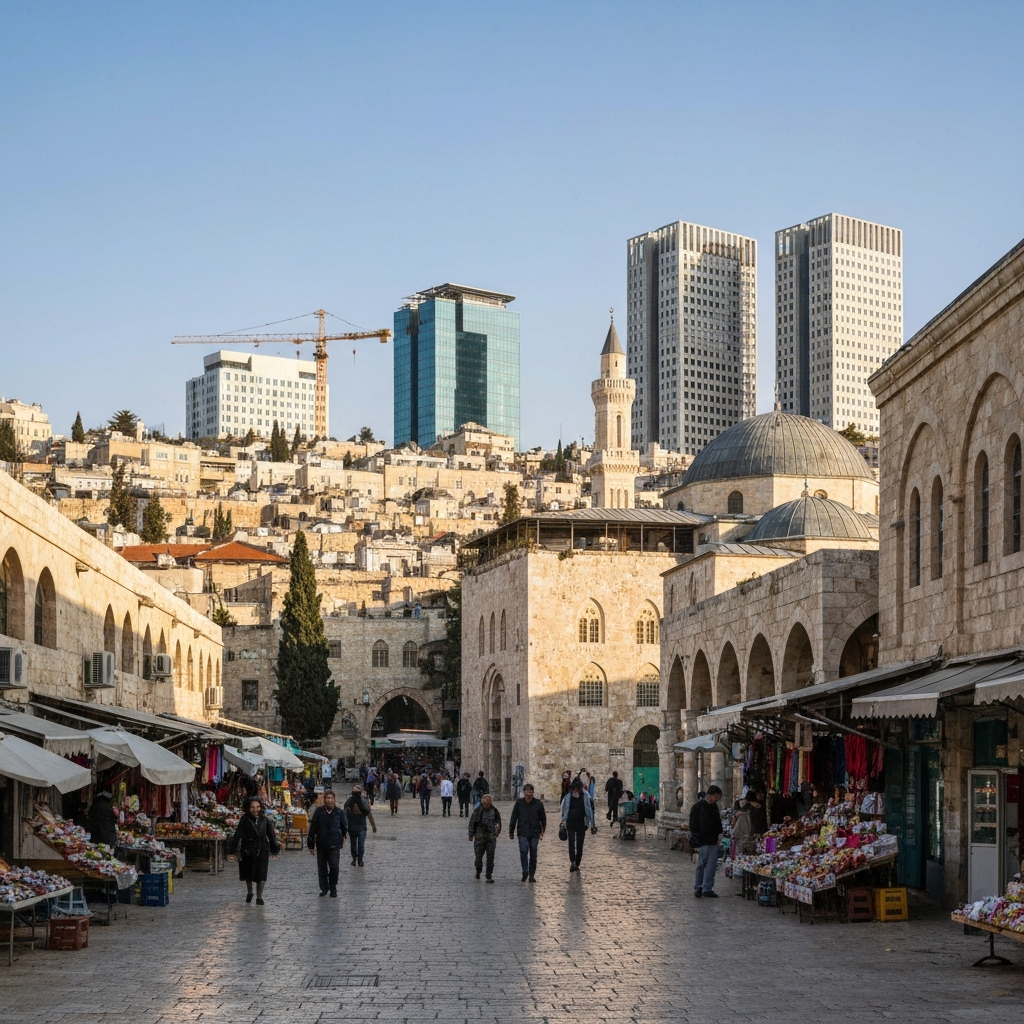
Jerusalem is undergoing significant urban renewal, with plans to accommodate an additional 200,000 residents. Mayor Moshe Lion announced this ambitious initiative, emphasizing the city’s commitment to smart, sustainable growth that respects environmental and cultural assets.
Strategic Development Plans
The city’s strategy includes constructing thousands of new housing units, expanding the light rail system, and repurposing underutilized buildings. This approach aims to enhance urban density without encroaching on green spaces, ensuring a balance between development and environmental preservation.
Community and Cultural Considerations
Urban renewal efforts also focus on maintaining Jerusalem’s rich cultural heritage. In the Armenian Quarter, for instance, there are ongoing discussions to protect the area’s historical significance amidst development pressures. Community leaders advocate for measures that safeguard the unique character of such neighborhoods.
Challenges and Community Engagement
While the renewal plans promise growth, they also present challenges, including potential disruptions to existing communities and the need for inclusive planning. Business owners in the city center have expressed concerns about construction impacts on foot traffic and commerce. In response, proposals like pedestrian bridges have been suggested to mitigate these effects.
Jerusalem’s urban renewal represents a pivotal moment for the city. By integrating strategic development with cultural preservation and community engagement, the city aims to evolve while honoring its historical and environmental legacy.