

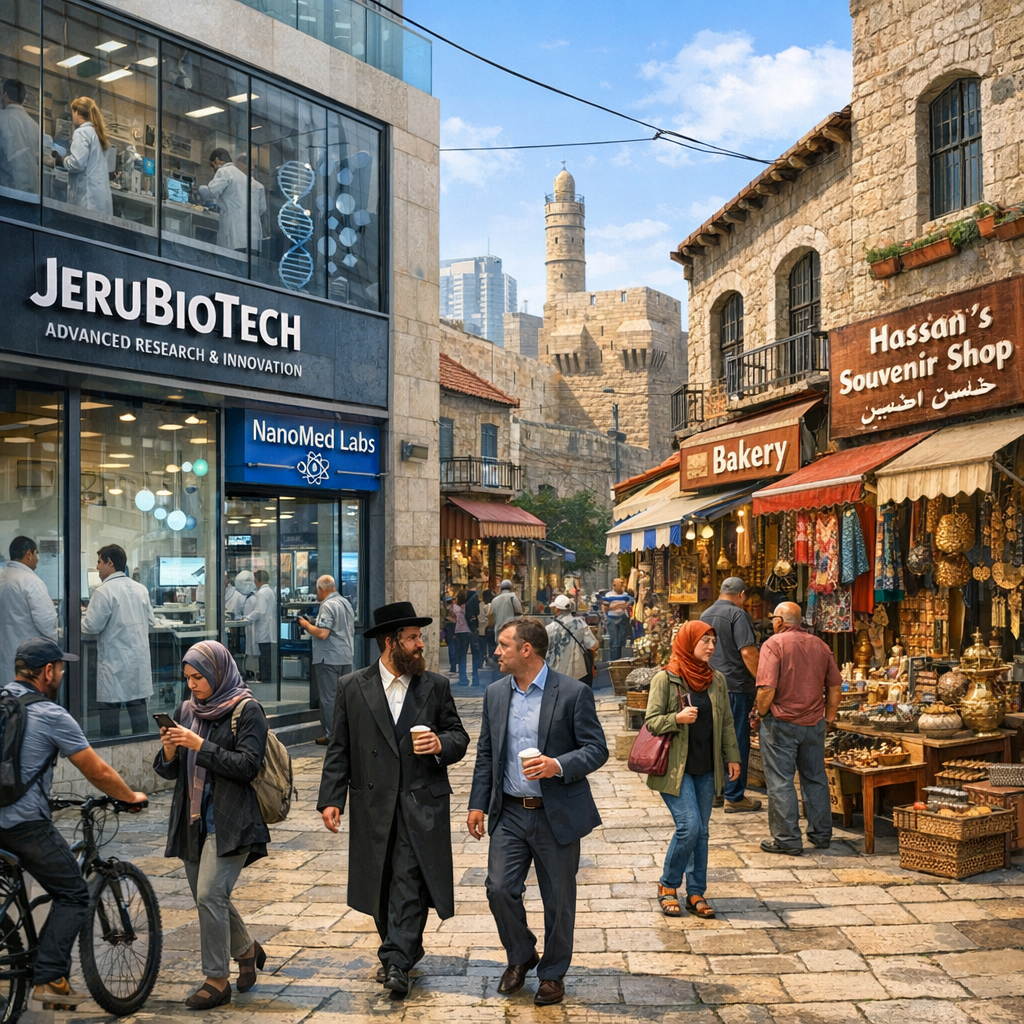
Jerusalem’s economic landscape is undergoing significant transformations, marked by the burgeoning biotech sector, evolving real estate dynamics, and the resilience of local businesses amidst various challenges.
Biotech Sector: A Rising Star
The city’s biotech industry has seen remarkable growth, with approximately 150 companies collectively raising around $1.7 billion, accounting for about 33% of all high-tech investments in Jerusalem. This sector employs around 2,000 professionals, many in medicine, research, and development. Notably, about 50 of these companies were established in the last five years, indicating a rapid acceleration in the field. Institutions like the Hebrew University and Hadassah Hospital, along with municipal support, have been instrumental in fostering this growth. Companies such as Brainsway and BrainQ Technologies exemplify the innovative spirit driving this sector forward.
Real Estate and Commercial Spaces
The demand for commercial spaces, particularly those ranging from 201 to 300 square meters, has been on the rise. These mid-sized spaces cater to established businesses that have outgrown startup phases but don’t require expansive floor areas. This segment has become a stable niche, especially for professional services, clinics, and R&D labs. Investors are increasingly recognizing the potential of these spaces, viewing them as resilient and profitable assets in Jerusalem’s commercial market.
Challenges in the Old City
Despite these positive developments, parts of Jerusalem, especially the Old City, face economic hardships. The area has experienced significant downturns, with many shops closing due to decreased tourism and other socio-economic factors. The reliance on tourism has made businesses vulnerable to fluctuations, leading to a pressing need for strategies that can bolster economic resilience in these historic quarters.
Fostering Economic Collaboration
Efforts to bridge community divides through economic collaboration have gained momentum. Events like the Jerusalem Business Overview have highlighted the importance of inclusivity and cross-community partnerships in driving sustainable growth. Leaders emphasize that fostering a diverse and inclusive business environment is not only beneficial for social cohesion but also a key driver for economic development.
In conclusion, Jerusalem’s business environment is a tapestry of growth and challenges. While sectors like biotech and real estate are thriving, there remains a need to address the economic difficulties faced by traditional businesses, especially in historic areas. Collaborative efforts and inclusive strategies will be pivotal in shaping a resilient and prosperous economic future for the city.