

Jerusalem’s economic landscape is undergoing significant transformations, reflecting a blend of enduring challenges and emerging opportunities. The city’s rich history and cultural significance continue to influence its business environment, while modern developments are reshaping its economic future.
Traditional Sectors Facing Challenges
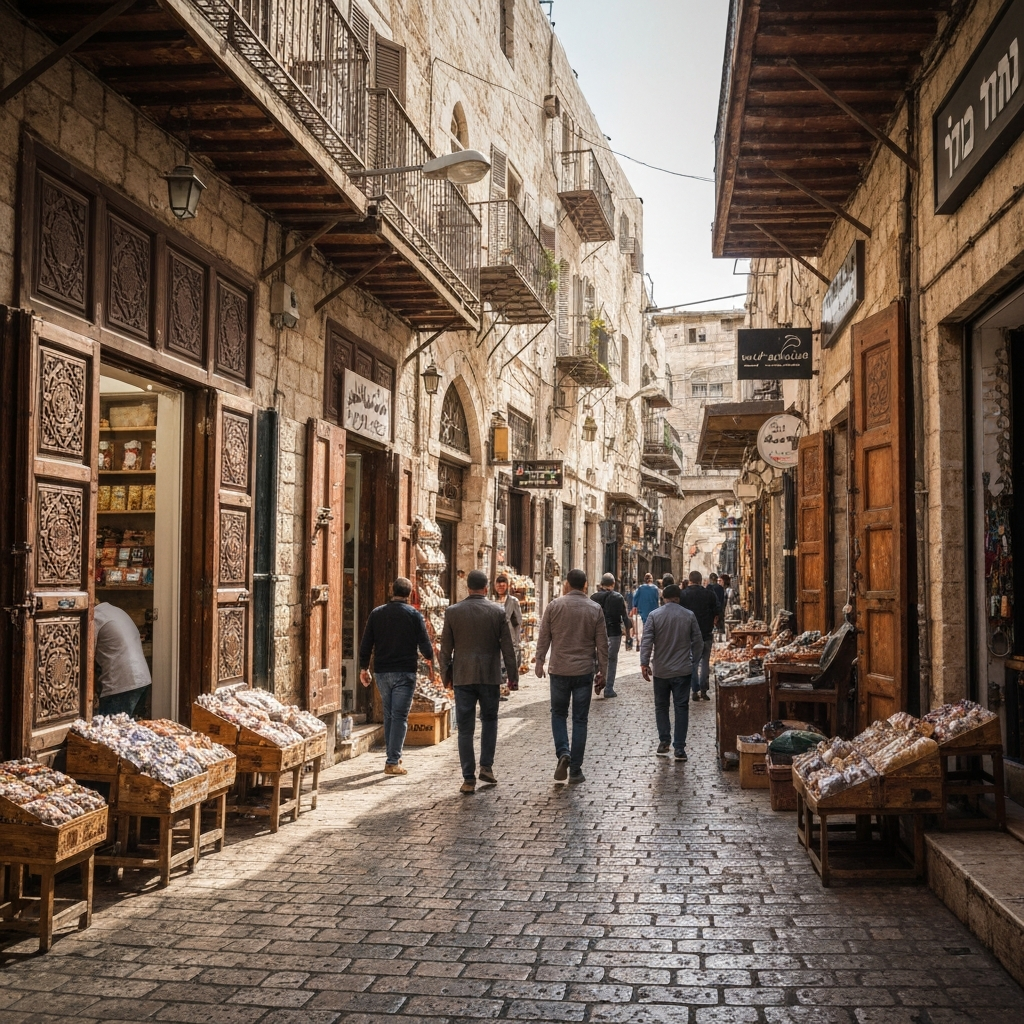
The Old City, a historic and cultural hub, has been particularly affected by recent socio-economic shifts. Merchants in this area have faced substantial hardships, with many shops experiencing closures due to various factors, including decreased tourism and increased operational costs. Reports indicate that approximately 90% of shop owners in the Old City rely on tourism, which has seen a significant decline, leading to a 90% closure rate of shops and impacting at least 500 families. Source
Additionally, the imposition of high property taxes, such as the ‘Arnona’ tax, has placed a heavy financial burden on business owners. Some businesses owe the municipality more than NIS 2 million (about $600,000), making it even more difficult for these shops to continue operations. Source
Emerging Industries and Innovation
Contrasting the struggles of traditional sectors, Jerusalem’s biotech industry has seen remarkable growth. The city is home to approximately 150 biotech companies, collectively raising around $1.7 billion, accounting for about 33% of all high-tech investments in Jerusalem. This sector employs around 2,000 professionals and continues to attract significant investment and talent. Source
Furthermore, initiatives aimed at fostering entrepreneurship and innovation are gaining momentum. Events like the Jerusalem Business Overview have highlighted the importance of cross-community collaboration and the role of young professionals in driving economic growth. Such forums emphasize that building bridges between Jerusalem’s diverse communities is not only beneficial for social cohesion but is also a key driver for sustainable business growth. Source
Real Estate and Commercial Spaces
The commercial real estate market in Jerusalem presents a mixed picture. Ground-level retail and service units represent a resilient yet deeply segmented market. As of late 2025, location dictates everything from yield stability to tenant risk. Demand remains steady in central, transit-oriented arteries, while peripheral districts show slower absorption. For investors, these spaces are less about speculative price jumps and more about building a defensive, cash-generating foundation in a city with unparalleled demographic strength. Source
Conclusion
Jerusalem’s business environment is at a crossroads, balancing the preservation of its historical and cultural identity with the demands of modern economic development. While traditional sectors face significant challenges, the rise of innovative industries and collaborative initiatives offer a promising path forward. Navigating this complex landscape requires a nuanced understanding of the city’s unique dynamics and a commitment to fostering inclusive growth.