

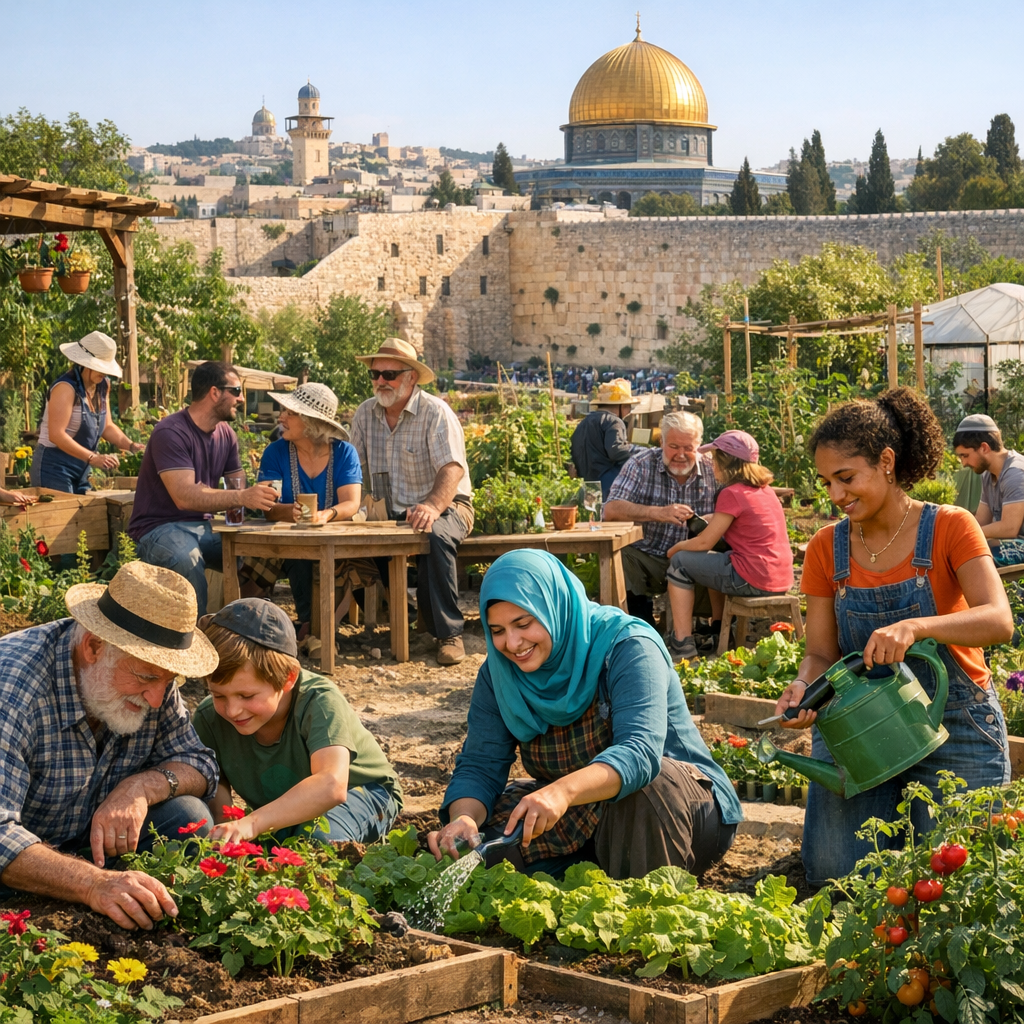
In the heart of Jerusalem, a quiet revolution is taking root. Community gardens are sprouting across the city, turning neglected spaces into vibrant green areas that promote environmental sustainability and social cohesion.
The Growth of Community Gardens
Over the past few years, Jerusalem has seen a significant increase in community gardens. These spaces, often established on previously unused land, serve as communal hubs where residents come together to cultivate plants, share knowledge, and build stronger neighborhood ties.
One notable example is the Bustania Community Garden in Kiryat Yovel and Kiryat Menachem. This initiative brings together diverse communities for cultural, educational, and social activities centered around gardening. Participants engage in planting, composting, and sustainable practices, fostering a sense of ownership and responsibility for their environment.
Environmental and Social Impact
The benefits of these gardens extend beyond aesthetics. They contribute to urban biodiversity, improve air quality, and provide fresh produce to local residents. Moreover, they serve as educational platforms, teaching children and adults alike about sustainable agriculture and environmental stewardship.
Organizations like the Jerusalem Green Fund (JGF) support these initiatives by providing resources and guidance. JGF’s projects, such as the Jerusalem Wildflower Sanctuary in Neve Yaakov, aim to rescue wildflowers from building sites and preserve native flora, enhancing the city’s natural heritage.
Community Engagement and Future Prospects
The success of Jerusalem’s community gardens lies in active community participation. Residents of all ages and backgrounds collaborate, breaking down social barriers and fostering a sense of unity. These gardens have become symbols of resilience, demonstrating how collective action can lead to meaningful environmental and social change.
Looking ahead, the continued expansion of community gardens in Jerusalem holds promise. They not only address environmental challenges but also strengthen the social fabric of the city. As more neighborhoods embrace this model, Jerusalem moves closer to becoming a greener, more sustainable, and cohesive urban environment.