

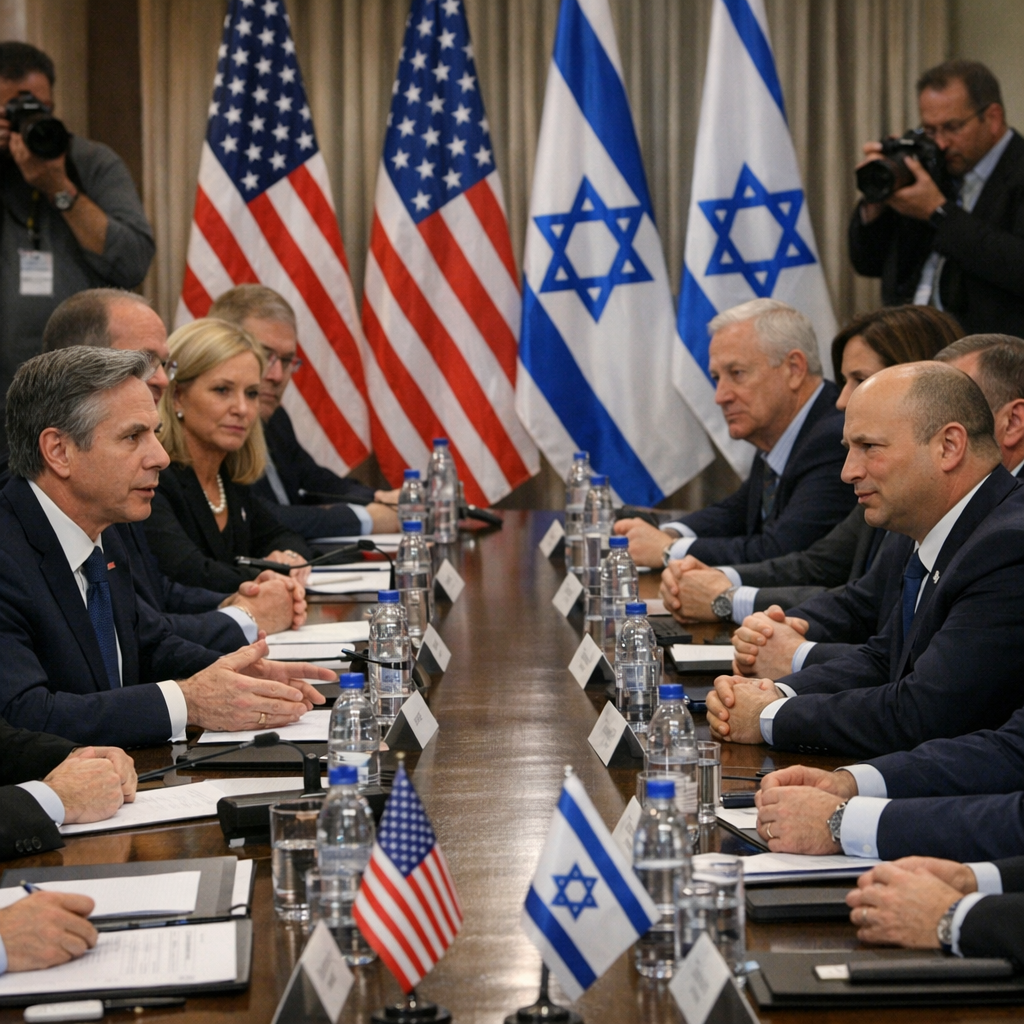
The relationship between the United States and Israel has been a cornerstone of Middle Eastern geopolitics for decades. This alliance, rooted in shared strategic interests and democratic values, has evolved through various historical milestones and continues to adapt to contemporary challenges.
Historical Foundations
The United States was among the first nations to recognize Israel’s independence in 1948. Over the ensuing decades, this relationship deepened, particularly during the Cold War era, as the U.S. sought to counter Soviet influence in the Middle East. Israel emerged as a key ally, receiving substantial economic and military assistance to bolster its security and regional stability.
Economic and Military Cooperation
Economic aid has been a significant aspect of U.S.-Israel relations. Since its founding, Israel has been the largest cumulative recipient of U.S. foreign aid, receiving over $300 billion (adjusted for inflation) in total economic and military assistance. While the United States has also provided large foreign aid packages to other Middle Eastern countries, particularly Egypt and Iraq, Israel stands apart. This support has facilitated Israel’s development into a technologically advanced nation with a robust defense infrastructure.
Military collaboration has also been pivotal. The U.S. has provided Israel with access to advanced weapon systems, intelligence sharing, and joint military exercises. This partnership has been mutually beneficial, with Israel contributing to U.S. strategic interests in the region.
Diplomatic Engagements
Diplomatic relations have seen both convergence and divergence. The U.S. has often played a mediating role in Israeli-Palestinian negotiations, aiming to foster peace and stability. However, differing perspectives on settlement policies and approaches to regional conflicts have occasionally led to tensions.
Contemporary Challenges
In recent years, the alliance has faced new challenges. The U.S. has been involved in efforts to broker an end to the war in Gaza, reflecting its ongoing commitment to regional peace. Additionally, the U.S. has provided active military support to Israel, including assistance in defense against Iranian ballistic missiles and joint operations targeting nuclear sites in Iran.
Despite these collaborative efforts, issues such as espionage incidents and differing strategies toward Iran have tested the resilience of the partnership. Both nations continue to navigate these complexities, striving to maintain a balance between national interests and mutual cooperation.
Looking Ahead
The U.S.-Israel relationship remains a dynamic and multifaceted alliance. As geopolitical landscapes shift, both countries are likely to continue adapting their strategies to address emerging challenges. The enduring nature of their partnership suggests a commitment to shared goals of security, prosperity, and regional stability.
Understanding the nuances of this relationship is crucial for comprehending broader Middle Eastern dynamics and the role of international alliances in shaping global affairs.