

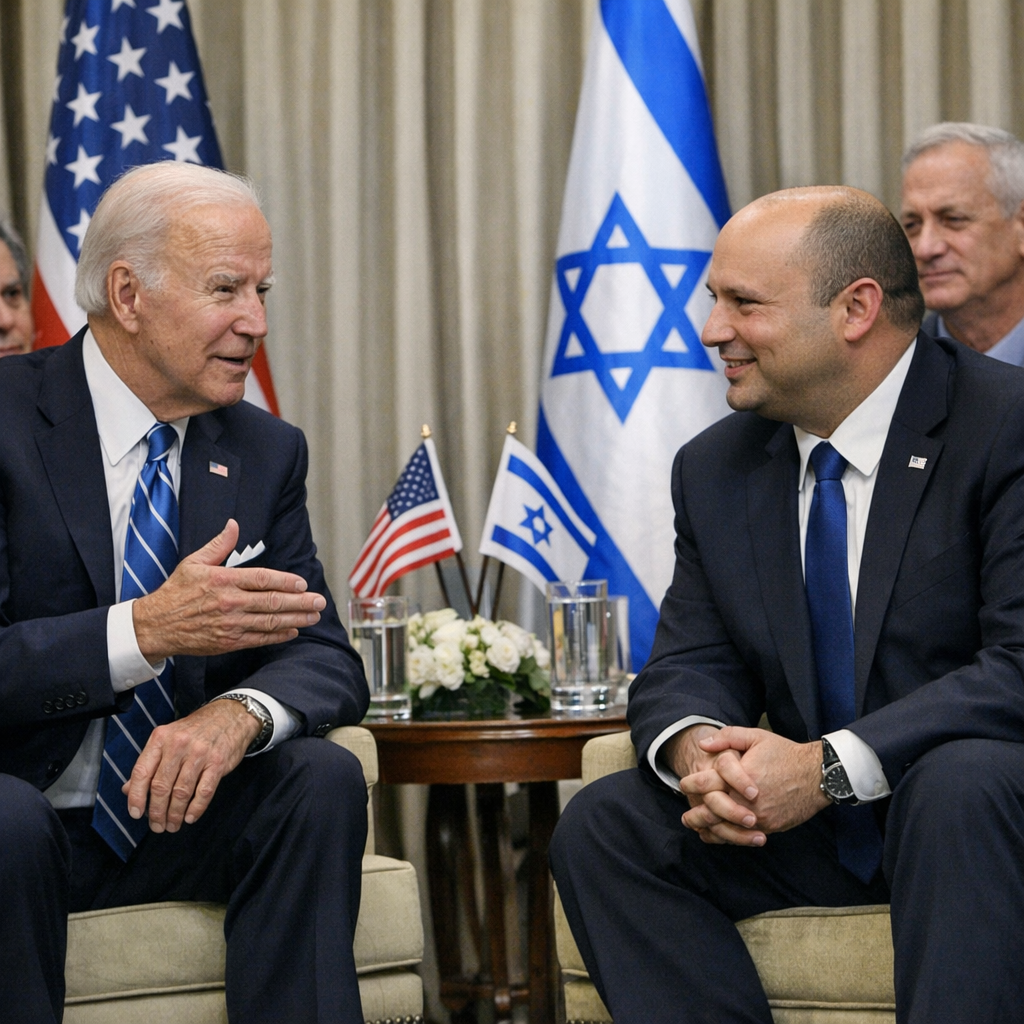
The relationship between the United States and Israel has been a cornerstone of both nations’ foreign policies for decades. This alliance encompasses economic, military, and diplomatic dimensions, reflecting shared strategic interests and mutual values.
Historical Foundations
Since Israel’s establishment in 1948, the United States has been a steadfast supporter. Over the years, this support has evolved into a deep partnership, with the U.S. providing significant economic and military assistance to Israel. This aid has been instrumental in bolstering Israel’s security and economic development.
Economic and Military Cooperation
Israel is the largest cumulative recipient of U.S. foreign aid, receiving over $300 billion (adjusted for inflation) in total economic and military assistance. While the United States has also provided large foreign aid packages to other Middle Eastern countries, particularly Egypt and Iraq, Israel stands apart. The United States has provisionally agreed via a memorandum of understanding (MOU) to provide Israel with $3.8 billion per year through 2028, including $500 million per year for missile defense. This support has enabled Israel to maintain a qualitative military edge in the region.
Strategic Partnership
Beyond financial aid, the U.S. and Israel engage in extensive intelligence sharing and joint military exercises. This collaboration enhances both nations’ capabilities to address regional threats and promotes stability in the Middle East. The U.S. also provides diplomatic backing to Israel in international forums, reinforcing its position on the global stage.
Shared Values and Challenges
The alliance is underpinned by shared democratic values and cultural ties. However, it also faces challenges, including differing approaches to regional conflicts and policy disagreements. Despite these, the foundational aspects of the relationship remain strong, driven by mutual interests and a commitment to regional security.
In conclusion, the U.S.-Israel relationship is a multifaceted alliance that has stood the test of time. It continues to adapt to changing geopolitical landscapes, reflecting the enduring bond between the two nations.