

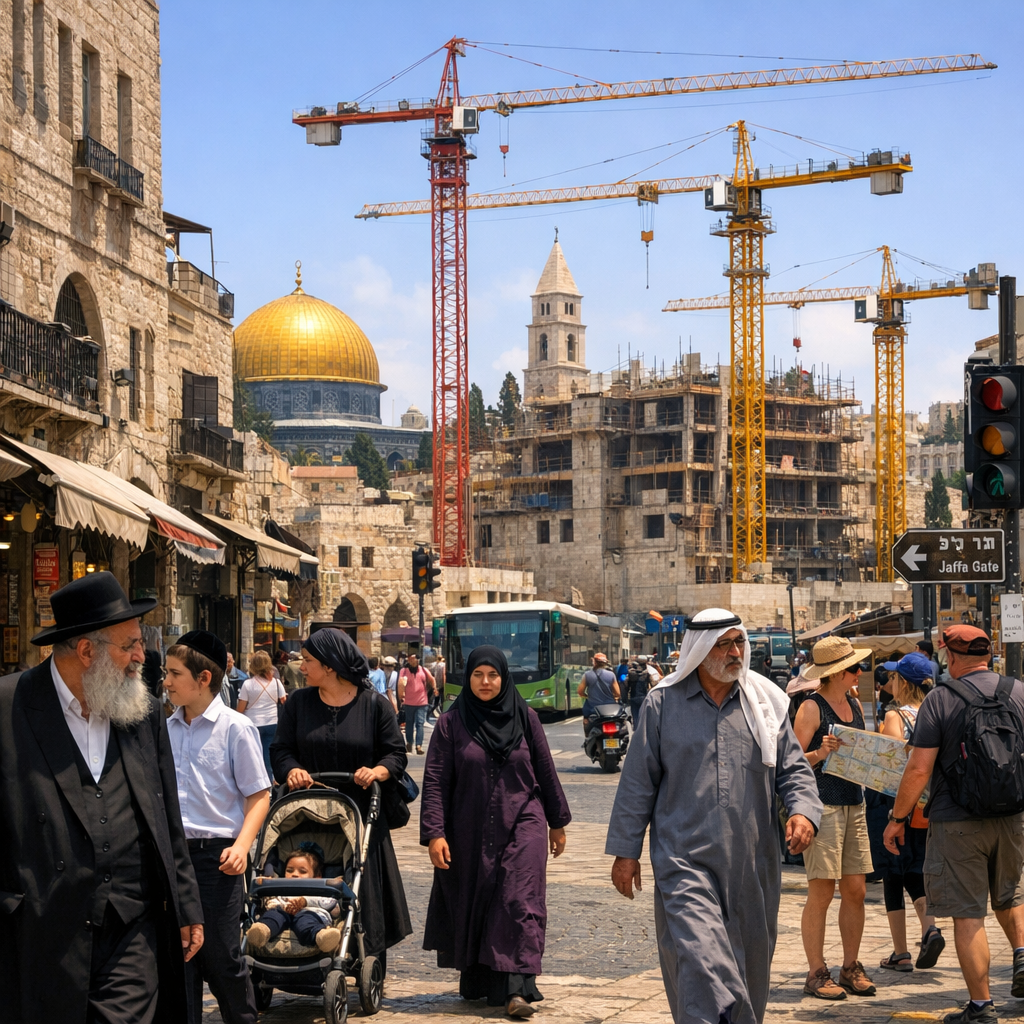
Jerusalem is undergoing a significant transformation, with numerous construction projects reshaping the city’s landscape. While these developments aim to modernize infrastructure and accommodate a growing population, they also present challenges for local communities and businesses.
Construction Boom and Its Impacts
In recent years, the city has approved thousands of new housing units, leading to a surge in high-rise constructions. This rapid development has caused disruptions, particularly in the city center, where ongoing projects have obstructed foot traffic and deterred customers from local businesses. Store owners have expressed concerns over declining sales and have called for solutions, such as the construction of pedestrian bridges, to mitigate the impact of construction on their livelihoods.
Community Safety and Shared Society Initiatives
Amidst the urban expansion, efforts are being made to foster community safety and cohesion. The Jerusalem Intercultural Center (JICC) has been actively promoting interactions between diverse communities, including Haredi and non-Haredi Jews, to address shared urban challenges. Initiatives focus on building consensus around common issues and ensuring equitable access to public resources.
Addressing Food Insecurity
The city’s development has also highlighted socio-economic disparities. Organizations like Jerusalem Food Rescuers are working to combat food insecurity, which affects vulnerable populations, including the Haredi and Palestinian communities. These efforts aim to provide nutritious food options and address the economic barriers that prevent many residents from accessing healthy meals.
Environmental Concerns
Environmental issues have also come to the forefront. In neighborhoods like Jabal Mukabbir, residents have raised alarms over illegal dumping and the burning of waste, which pose health risks and degrade the quality of life. Despite community protests and appeals, municipal responses have been slow, leaving residents to contend with hazardous conditions.
Looking Ahead
As Jerusalem continues to evolve, it is crucial to balance development with the needs of its diverse communities. Ensuring that urban planning includes input from all residents, addresses socio-economic disparities, and prioritizes environmental sustainability will be key to fostering a harmonious and thriving city.