

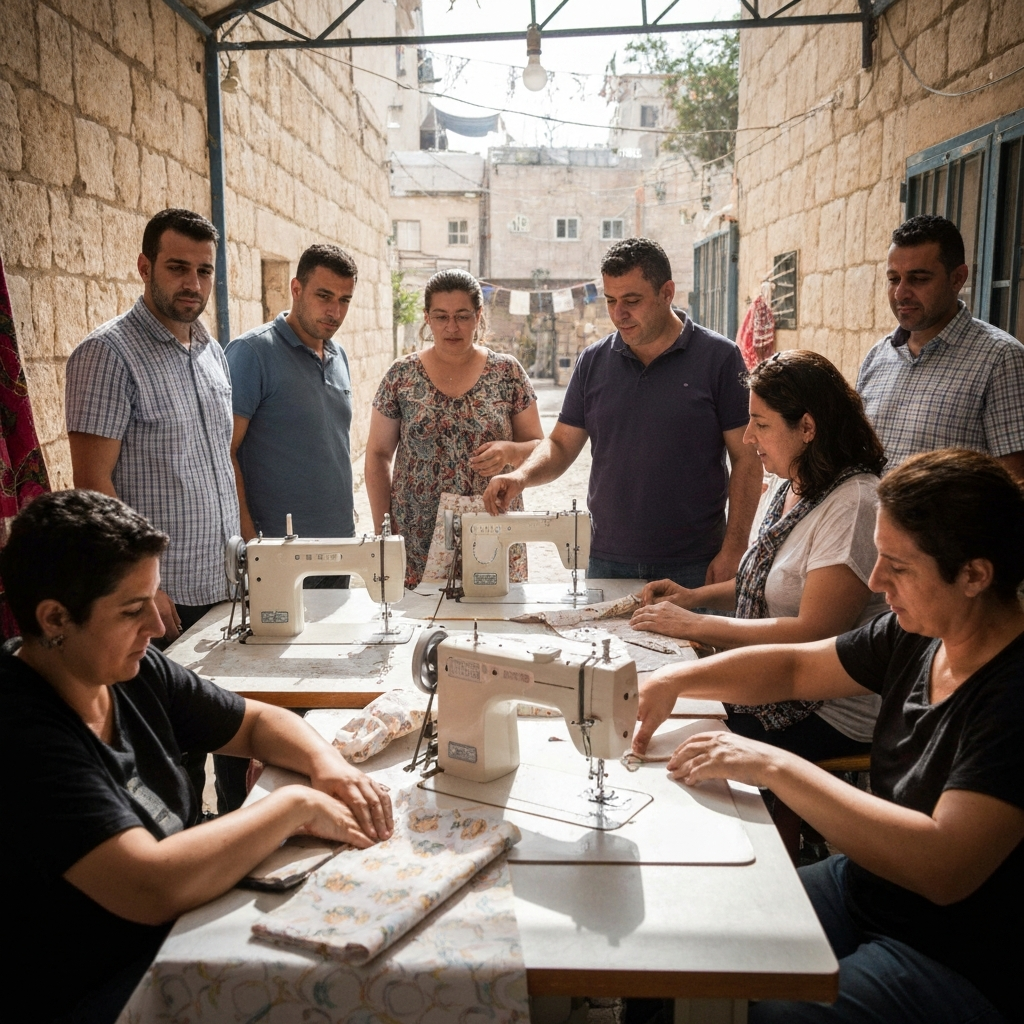
Jerusalem’s seam line neighborhoods, where East and West converge, have long been areas of tension and fragile coexistence. Recent initiatives seek to transform this reality by fostering trust, improving personal safety, and building resilience across these divided communities.
Community Resilience Partnerships
The Jerusalem Intercultural Center (JICC) has launched the Partnership for Seam Line Community Resilience project, a three-year initiative aimed at strengthening trust and cooperation among diverse communities. This project brings together community councils, residents, law enforcement, and municipal officials to develop joint initiatives that promote calm and cooperative responses to conflict. Over time, 16 community centers and hundreds of local leaders are expected to create a network of resilience spanning Jerusalem’s most sensitive borders. [Source]
New Models for Community Safety
In May 2025, the second steering committee of the Community Safety on the Jerusalem Seam Line Project convened to develop a community-centered safety model that bridges divides and fosters practical cooperation. This program is being piloted in neighborhoods such as Beit Hanina, Kufr Aqeb, Ramot, and French Hill, each chosen for their complexity and significance. These neighborhoods represent the broader social seams of the city, and the project aims to reimagine what it means for Jerusalemites to feel safe where they live, work, and raise their families. [Source]
Challenges and Ongoing Efforts
Despite these positive steps, challenges remain. The Jerusalem Institute for Policy Research notes that neighborhoods along the seam line are areas of heightened sensitivity, with fundamental problems that have worsened during times of conflict. Issues such as inadequate infrastructure, lack of services, and the necessity of passing through checkpoints disrupt daily routines and contribute to a sense of neglect and discrimination. [Source]
Efforts to address these challenges are ongoing, with various organizations and community leaders working to create a more inclusive and resilient Jerusalem. The success of these initiatives depends on continued collaboration and commitment from all stakeholders involved.